 Basilian Order of Saint Josaphat


Blessing of the Mundare Grotto of the Basilian Fathers of the Order of Saint Basil the Great
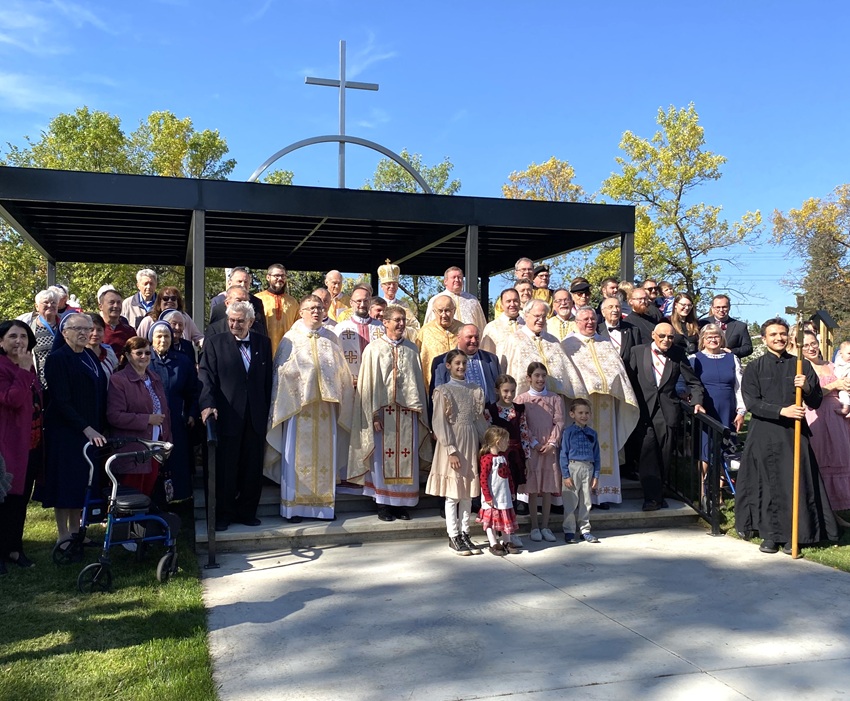
On Saturday, September 19, 2026, the Basilian Fathers, clergy, religious, parishioners and pilgrims gathered in Mundare, Alberta, for a joyful and historic occasion: the blessing of the newly reconstructed Mundare Grotto, located beside the Basilian Monastery and Saints Peter and Paul Ukrainian Catholic Church.
The celebration began at 10:30 a.m. with the Divine Liturgy presided over by Most Rev. David Motiuk, Bishop of the Ukrainian Catholic Eparchy of Edmonton. Very Rev. Fr. Damian Dutka, OSBM, Provincial Superior, members of the Basilian Order, local and visiting clergy, and many faithful joined in prayer. Eighteen priests were present, together with Deacon Thomas Nahachewski from Saskatoon.
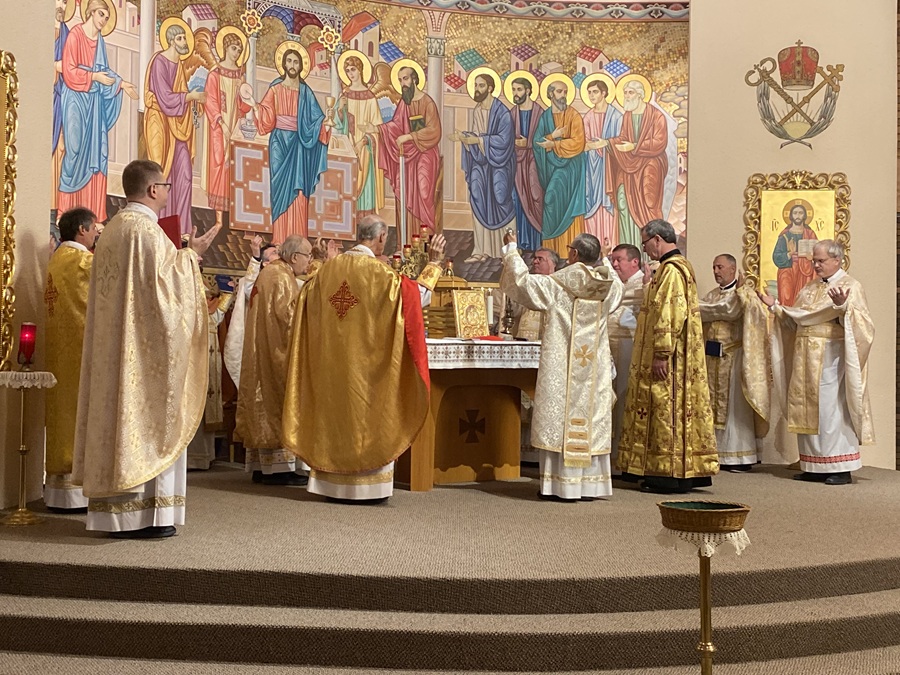
The Mundare Grotto has a long and cherished history. During the 1930s and 1940s, Basilian Fathers and Brothers, working together with members of the local community, established this sacred place as a destination for prayer and pilgrimage. Over the decades, generations of faithful came there carrying their gratitude, sorrows, hopes and petitions. With the passing of time, however, the original structure deteriorated considerably. Portions became unstable and began to fall apart, making major reconstruction necessary if the pilgrimage site was to continue serving future generations.
The Basilian Province therefore undertook the challenging work of rebuilding the grotto. Heavy machinery was required, while important elements of the original site, including the Way of the Cross, were carefully preserved and refurbished. At the centre of the renewed pilgrimage grounds is a beautiful altar area and a prominent Cross, drawing the eyes and hearts of pilgrims toward Christ.
The reconstruction was not without difficulties. As Sister Doloretta later observed, at the beginning not everyone could see clearly where the project was leading. People loved the old grotto and the memories connected with it, and significant change naturally brought questions, hesitation and, at times, differences within the community. Yet slowly, through prayer, conversation, perseverance and the willingness of people to work together, the vision became clearer. What at first seemed uncertain gradually became something beautiful. God’s grace worked through many hands, different personalities and different perspectives, bringing the project to completion.
Following the Divine Liturgy, Bishop David, the Basilian Fathers, clergy and faithful processed to the renewed grotto for the solemn blessing. The words of the Ukrainian Catholic rite beautifully expressed the purpose of the entire project, describing a holy place “erected in beauty for Your glory and for the consolation of the people here.” The prayer asks the Lord to send down the Holy Spirit upon the site so that prayer and praise may continually be offered there for His people.
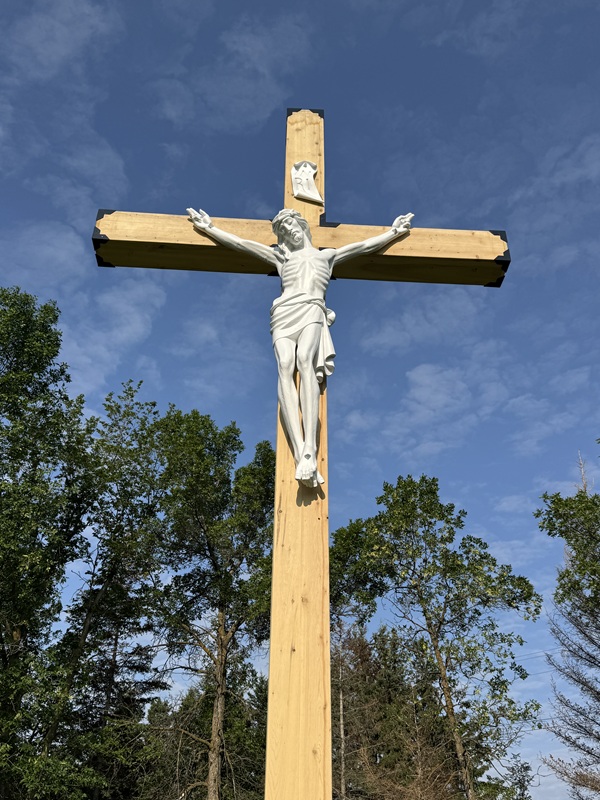
In his homily, Bishop David reflected especially upon the power of the Cross. He recalled the ancient Christian tradition concerning Emperor Constantine, who before a decisive battle encountered the sign of Christ and associated his victory with the Cross. Constantine’s subsequent reign brought freedom to Christians after generations of persecution and allowed the Christian faith to become increasingly visible within the Roman Empire. Bishop David also recalled St. Helena, Constantine’s mother, whose pilgrimage to the Holy Land is traditionally associated with the finding of the True Cross.
The connection was particularly fitting for Mundare. The Cross standing at the heart of the grotto is not simply a monument or decoration. It is a visible proclamation of Christ’s victory and a reminder of our Christian identity. The blessing rite calls the Cross an “invincible weapon,” a “support of faith,” and a “firm confidence in salvation.” It asks that all who approach the Cross in faith may be strengthened in hope and guided toward what is good.
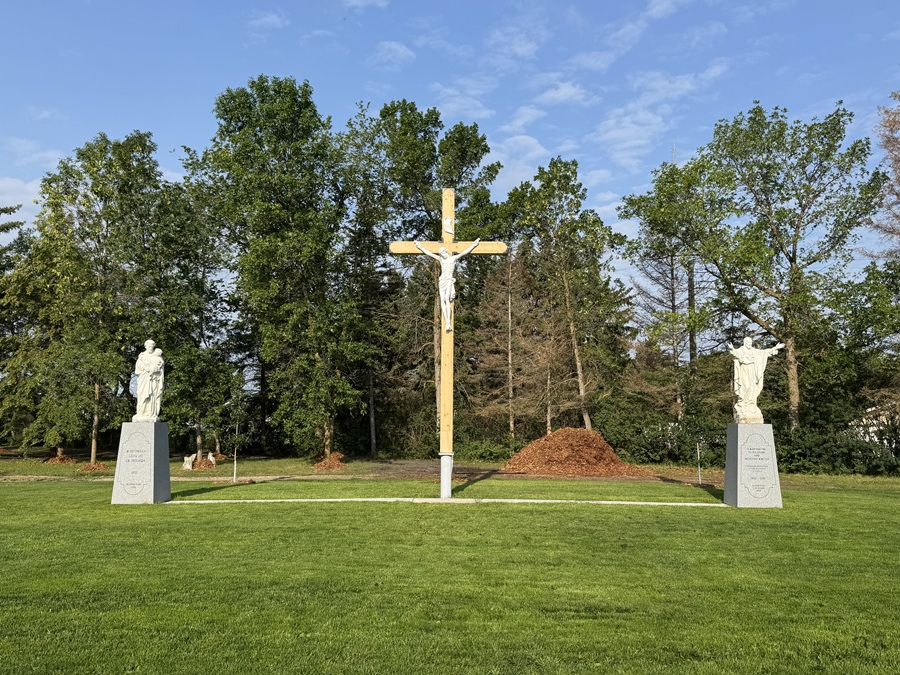
A pilgrimage, therefore, is much more than travelling to a religious place. To make a pilgrimage is to step away from the ordinary routine of life and intentionally turn toward God. People come carrying different intentions: thanksgiving, illness, grief, family difficulties, uncertainty about the future, a need for healing, or simply a desire to grow closer to Christ. At a pilgrimage site we place these intentions before the Lord and remember that we never carry our crosses alone.
One parishioner captured this beautifully after the blessing. He admitted that at the beginning he too had been hesitant about the changes to the grotto. But after coming to the celebration and seeing the completed pilgrimage site, he was grateful that he had come. The renewed grotto gave him a sense of peace and tranquility. His hope was that future generations would also come to this place, encounter its beauty, and allow this visible expression of faith to touch their hearts.
This testimony speaks to the deeper meaning of the reconstruction. We did not rebuild the grotto simply to make something new or more attractive. We rebuilt it so that the faith handed down to us might continue speaking to those who come after us. The outward form may have changed, but its purpose remains the same: to lead people to prayer, to conversion, to hope and ultimately to Jesus Christ.
At the conclusion of the blessing, Fr. Damian expressed gratitude to Bishop David, the clergy and religious, parishioners, benefactors, workers, volunteers and all those whose generosity, labour and perseverance made the reconstruction possible. What began with uncertainty became, through the cooperation of many people and the grace of God, a gift for the entire Church.
The celebration concluded with a luncheon and warm fellowship, continuing the spirit of pilgrimage through community and thanksgiving. People who had walked through the years of planning and reconstruction could now sit together, share a meal and rejoice in what had been accomplished.
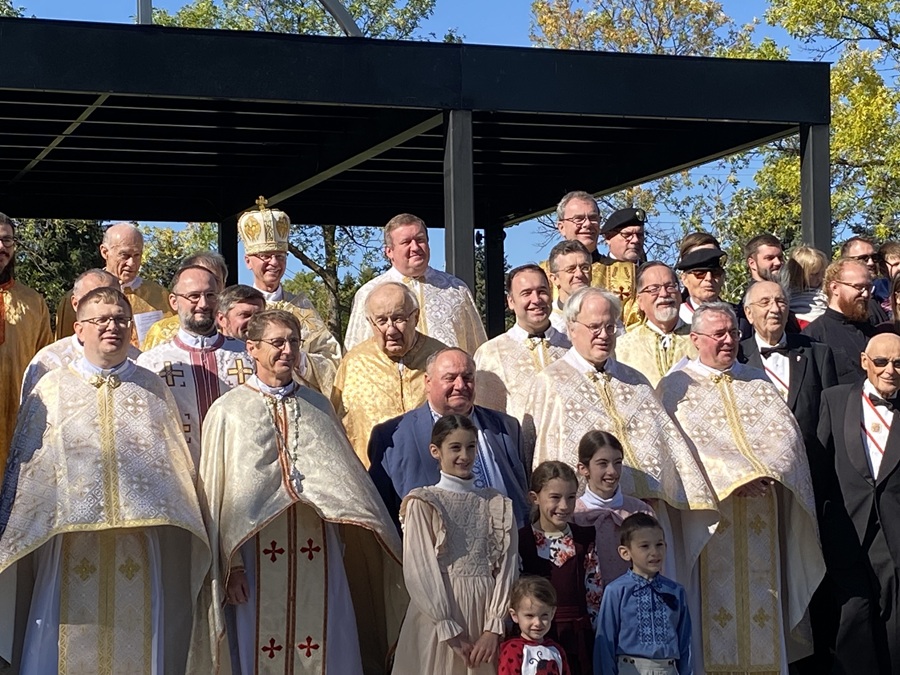
The renewed Mundare Grotto now belongs not only to the local parish community but is offered once again as a place of pilgrimage for the entire Eparchy and for all who seek a quiet place to encounter God. Here people may walk the Way of the Cross, participate in the Divine Liturgy, pray before the Cross, bring their worries to the Lord, and find moments of peace in His presence.
The final hymn of the blessing expresses beautifully what this place is meant to proclaim: “The Cross is the guardian of the whole world; the Cross is the beauty of the Church… the Cross is the support of the faithful.”
May generations yet to come discover at the Mundare Grotto a place of peace, prayer and spiritual renewal. And may every pilgrim who comes carrying a burden leave strengthened by the Cross and reminded that, even through uncertainty and change, God continues to work through His people, transforming our efforts into something that can lead others closer to Christ.
Fr. Gabriel Haber OSBM


