 Basilian Order of Saint Josaphat


When Faith Took Root on the Prairies: New Exhibition Opens at the Basilian Fathers Museum
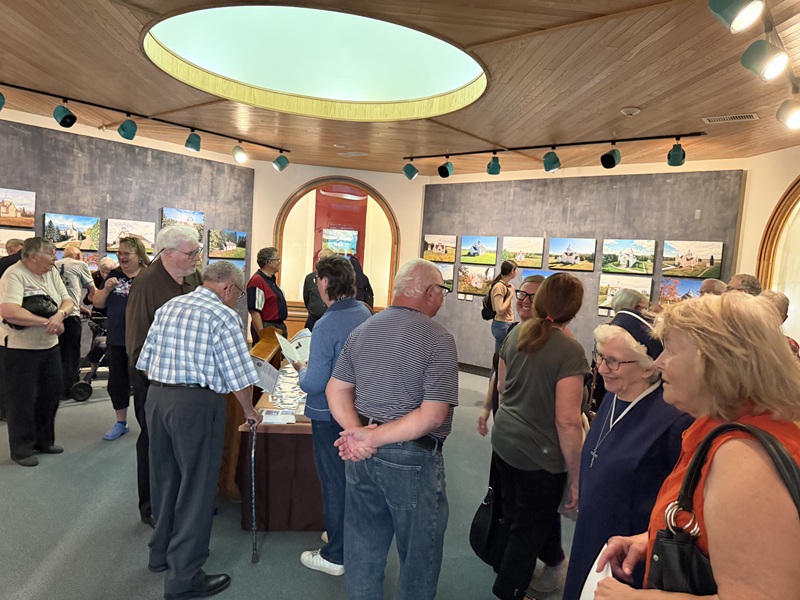
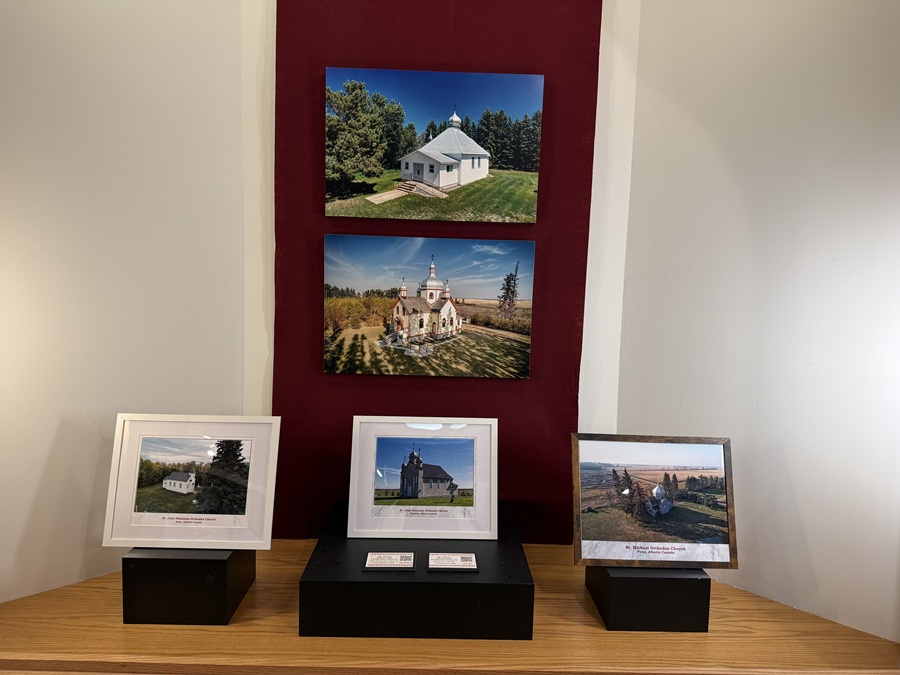
On September 20, 2026, the Basilian Fathers Museum in Mundare opened a new photographic exhibition dedicated to the historic churches of the Canadian Prairies. The exhibition features the work of Russell Sawchuk, creator of the Pioneer Churches on the Prairies project, which documents old rural churches, their interiors, cemeteries and the stories of the communities that once gathered around them.
These small churches scattered across the fields of Alberta, Saskatchewan and the wider Prairies are much more than old buildings. They tell the story of people who came to Canada at the end of the nineteenth and beginning of the twentieth centuries, especially immigrants from Ukraine. Many arrived with very little. They cleared the land, established farms, built homes and raised families. Yet one of their first priorities was often to build a church.
As older parishioners often told me when I was serving in the Lamont district: “They did not come to Canada carrying great riches, but they brought God with them.” Their faith was one of their greatest treasures, and the church became the heart of the community.
Around the church, a whole community life developed. Almost every small parish had its own choir, catechism classes for children, church and community organizations, and a chytalnia, or reading room. These reading rooms were places where people gathered to read, learn, discuss current events and preserve their Ukrainian language and culture.
It is especially valuable that many of the original books from these old reading rooms have survived. Today they form part of the collections of the Basilian Fathers Museum. One hope for the future is to create a proper library where these books and other materials can be organized and made more accessible to visitors, students and researchers.
After the Second World War, life on the Prairies began to change quickly. Many families left the farms and small rural communities and moved to towns and cities. Rural populations declined, and some once-thriving parishes gradually became smaller or closed. Today, many of these churches stand quietly among the fields, but they remain important witnesses to the history of our ancestors.
This is the heritage Russell Sawchuk is working to preserve. His own family has pioneer roots: his grandparents settled near Arran, Saskatchewan, in 1908. Through photography, video, drone footage and historical research, he is creating a digital record of these churches and the communities connected with them.
The project now includes 132 church pages, more than 4,800 photographs and over 100 videos. It features Ukrainian Catholic and Ukrainian Orthodox churches, as well as churches belonging to other Eastern Christian communities. Its purpose is not simply to photograph buildings, but to preserve the memory of the people who prayed in them, built them through sacrifice and passed on their faith to their children.
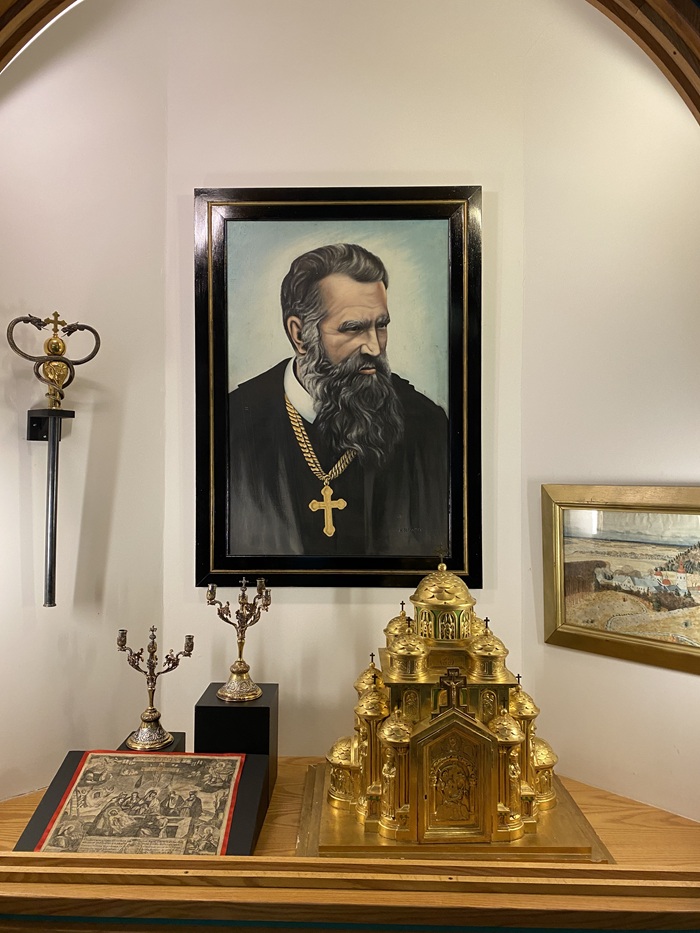
For this reason, the exhibition fits naturally with the mission of the Basilian Fathers Museum. From the beginning of their ministry in Canada, the Basilian Fathers understood that preserving faith also meant preserving the history, language and culture of the Ukrainian people.
The museum holds a large collection of liturgical books, historical publications, newspapers, periodicals and archival materials. Among its most treasured items are the Ostroh Bible and the Ostroh Gospels. The museum also preserves important materials relating to the history of Ukraine, the development of Ukrainian Catholic parishes in Canada, and the many religious, cultural and community organizations created by earlier generations.
Some of these organizations continue today, while others no longer exist. Their books, photographs, reports and records, however, continue to tell the story of how Ukrainian communities built their spiritual and cultural life in Canada.
Visitors from Ukraine are often especially impressed by what they discover in the museum. They see how much Ukrainian religious, historical and cultural heritage was preserved here, far from the homeland.
During the decades of Communist rule in Ukraine, Church life was persecuted and many religious and cultural traditions were restricted or suppressed. At the same time, Ukrainian communities in Canada continued to preserve liturgical books, Ukrainian publications, Church traditions, historical documents and the memory of community life. In this way, the Canadian Prairies became one of the places where an important part of Ukraine’s spiritual and cultural heritage was protected and handed on.
The museum also serves scholars and researchers. Over the years, its collections have been used by students and academics, including those working on doctoral studies. Old books, parish records, newspapers and archival documents have become valuable sources for understanding Church history, immigration and Ukrainian Canadian life.
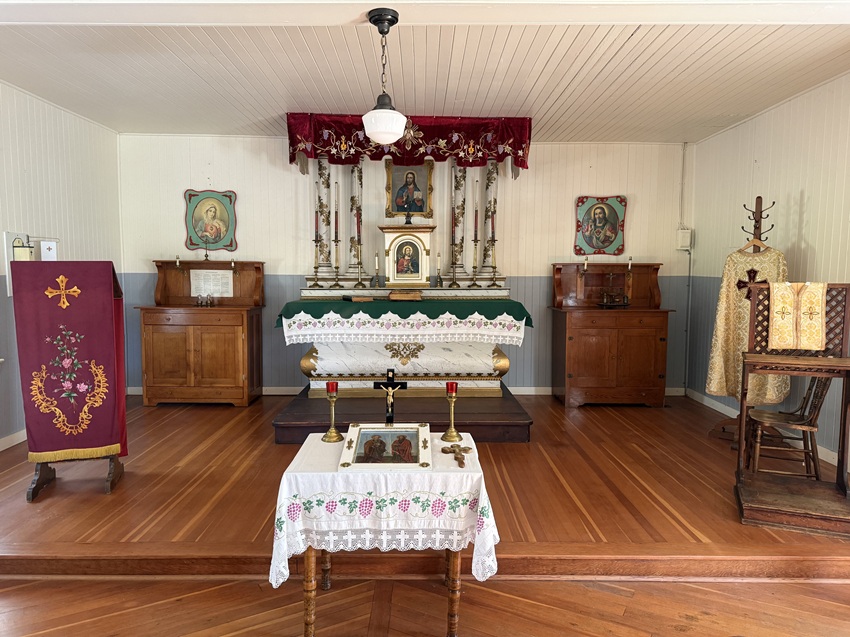
The new exhibition therefore brings together two important missions. The Basilian Fathers Museum preserves the written, liturgical and cultural memory of our people, while Russell Sawchuk’s photographs preserve the visible signs of that faith — churches, bell towers, crosses and cemeteries standing across the Prairies.
We are grateful to Russell Sawchuk for his dedication and for helping preserve this important heritage.
We warmly invite everyone to visit the Basilian Fathers Museum in Mundare and experience the new exhibition. More photographs, videos and histories can also be found at PioneerChurches.ca.
These old churches remind us of a simple but powerful truth: our ancestors may not have come to Canada with great wealth, but they came with faith.
They built homes, worked the land, raised families, formed choirs and organizations, opened reading rooms and taught their children — and in the midst of all of this, they always made room for God.
Our responsibility today is to preserve this heritage, learn from it and pass it faithfully to the generations that will come after us.
Fr. Gabriel Haber OSBM


