
 Basilian Order of Saint Josaphat



Saint Josaphat and saint Catherine of Siena: the renewal of the church begins within
From Personal Conversion to the Spiritual Renewal of the Church
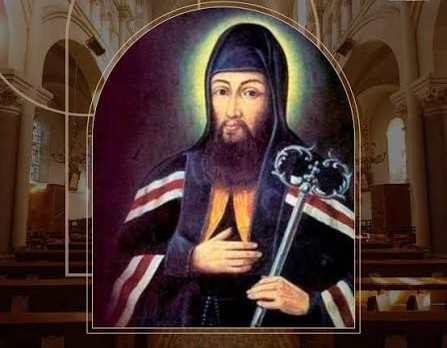
As we celebrate the feast of Saint Josaphat Kuntsevych, bishop, martyr, and Apostle of Unity, we are invited to reflect not only on his great achievements but also on the spiritual foundation of his life. An illuminating comparison can be made between Saint Josaphat, a monk of the Eastern Christian tradition, and Saint Catherine of Siena, a Dominican laywoman and mystic of the Western Church. Although separated by more than two centuries, both saints demonstrate a fundamental principle of Christian spirituality: the authentic renewal of the Church begins with personal conversion, deep communion with Christ, and the transformation of the human heart. Their lives reveal how prayer and contemplation can develop into an active mission of evangelization, reconciliation, and spiritual renewal. [1]
Saint Josaphat: The Monastery as a School of Spiritual Transformation
Saint Josaphat was born around 1580 in Volhynia, in present-day Ukraine, and received the baptismal name Ivan. In 1604, he entered the Monastery of the Holy Trinity in Vilnius and took the religious name Josaphat. His decision marked the beginning of a profound spiritual journey. Rather than immediately assuming public leadership, he devoted himself to prayer, fasting, spiritual reading, and the disciplined life of a monk. [2]
Josaphat’s education was not primarily the result of advanced university studies. He developed much of his theological understanding through personal reading, the guidance of learned Christians, and especially the liturgical tradition of the Eastern Church. He studied the Holy Scriptures, writings of the Church Fathers, the lives of the saints, and the Byzantine liturgical books. His formation was therefore both intellectual and spiritual. The Divine Liturgy and the daily cycle of prayer became a living school of theology.
Recent historical scholarship confirms the importance of this formative period. In her 2025 study of Josaphat’s monastic journey, historian Genutė Kirkienė describes how, during the years 1604–1607, Josaphat embraced a particularly solitary form of life within the monastery. Drawing upon earlier testimonies, she notes that he withdrew to a chapel where, during his free time, he would “either read or reflect on holy matters.” [3]
This detail reveals something essential about Josaphat’s spirituality. Before he became a teacher, he was a disciple. Before he could guide others toward holiness, he sought holiness himself. He understood that theological knowledge without prayer could remain merely an intellectual exercise, while prayer deeply rooted in Scripture and the Church’s liturgical tradition could transform the entire person.
His prayer, fasting, and spiritual discipline were not intended simply to produce a stronger personality. Their purpose was to open his life to the grace of God. Josaphat desired to become more fully conformed to Christ, allowing his thoughts, decisions, and actions to reflect the Gospel.
This transformation gradually became visible to those around him. Pope Pius XI, writing in his 1923 encyclical Ecclesiam Dei, recalls the testimony of Metropolitan Joseph Veliamyn Rutsky, who observed that Josaphat “in a short time made such progress in the monastic life” that he could already serve as a spiritual example to other monks. [4]
The significance of this testimony is profound. Josaphat’s influence began not with authority, position, or institutional power, but with the credibility of a life increasingly surrendered to God.
From Personal Holiness to the Renewal of the Church
Josaphat’s spiritual development did not remain confined to his monastic cell. His example encouraged others, and his collaboration with Metropolitan Joseph Veliamyn Rutsky helped strengthen and renew Basilian monastic life. What began as personal discipline gradually became a source of communal transformation.
As a priest, archimandrite, and eventually Archbishop of Polotsk, Josaphat worked to improve the spiritual and educational formation of clergy, encourage greater pastoral responsibility, and strengthen the religious life of the faithful. He placed particular emphasis on the Byzantine liturgical tradition and the unity of the Church.
His efforts took place amid the difficult religious and political circumstances following the Union of Brest. The historical record also reveals that his mission unfolded within serious tensions between Catholic and Orthodox communities. These conflicts must be acknowledged when studying his life. Nevertheless, the spiritual significance of his personal formation remains evident: his public mission was deeply connected to the years he had spent in prayer, study, and ascetical discipline. [5]
In this way, Josaphat’s life demonstrates how spiritual renewal can spread outward like ripples across the surface of water. A monk begins by seeking God. His personal holiness influences fellow monks. The monastery grows stronger. Better-formed religious and clergy serve the faithful. Gradually, the influence of one person’s conversion reaches an entire ecclesial community.
Saint Catherine of Siena: From Contemplation to Apostolic Mission
A similar spiritual journey can be observed in the life of Saint Catherine of Siena, born in Italy in 1347. While still young, Catherine joined the Dominican Third Order, known as the Mantellate. Unlike Josaphat, she did not enter a monastery but continued living in her family home. There she devoted herself to prayer, penance, and contemplation, seeking an ever-deeper union with Jesus Christ.
Catherine’s first great spiritual task was not to correct the problems of society or reform the Church. It was to allow God to purify her own heart. She spent considerable time in solitude, learning to recognize her spiritual weaknesses, overcome selfishness, and place her entire trust in Christ. [6]
In her famous spiritual work, The Dialogue, Catherine emphasizes the importance of entering what she calls the “cell of self-knowledge.” She explains that “knowledge must precede love.” [7]
For Catherine, self-knowledge was not unhealthy preoccupation with personal weaknesses. It meant discovering the truth about oneself in the presence of God’s infinite goodness. By recognizing our dependence upon God, we begin to understand His mercy. From this knowledge arises gratitude, humility, and authentic love.
But Catherine’s contemplative vocation did not end in solitude. According to the tradition recorded by her spiritual director, Blessed Raymond of Capua, she came to understand that Christ was calling her beyond the privacy of her room and into the service of others. She was to bring His teaching and love into the world.
Catherine began caring for the sick, assisting the poor, encouraging sinners to return to God, and offering spiritual counsel. Eventually, she became deeply involved in the life of the Church, writing to religious leaders and even to popes. She encouraged Pope Gregory XI to return from Avignon to Rome and urged the Church toward spiritual reform, peace, and reconciliation.
Pope Benedict XVI, reflecting upon her life in 2010, emphasized that Catherine continues to encourage Christians to “walk courageously toward holiness.” [8]
Yet Catherine never abandoned her contemplative life. Instead, she learned that genuine contemplation must produce the fruits of charity. Her prayer became service; her love for Christ became love for her neighbour; and her personal conversion became a source of encouragement for countless others.
Two Spiritual Traditions, One Path to Holiness
Here we discover the remarkable spiritual connection between Saint Josaphat and Saint Catherine.
Josaphat was formed by the Divine Liturgy, Eastern monastic asceticism, the writings of the Church Fathers, and the spirituality of Saint Basil the Great. Catherine was formed within Dominican spirituality, which emphasizes contemplation, the knowledge of God, and the proclamation of divine truth.
Their spiritual experiences were not identical, but their fundamental journey followed a common pattern: first encounter Christ, then allow Him to transform the heart, and finally bring His love to others.
In the Eastern Christian tradition, this transformation is understood through the theology of theosis, or divinization. The Catechism of the Ukrainian Catholic Church, Christ Our Pascha, teaches that the journey toward divinization includes purification from sinful passions, illumination through prayer and contemplation, and ever-deeper union with God. It is through God’s grace, received and freely embraced, that the human person is gradually transformed. [9]
Pope Saint John Paul II, in his apostolic letter Orientale Lumen, explains that Eastern Christian spirituality understands salvation as participation in God’s own life. He also emphasizes that monastic prayer leads toward communion and service: the person who truly seeks God discovers a growing responsibility for the spiritual and material needs of others. [10]
This teaching helps us understand both saints. Josaphat’s monastic discipline and Catherine’s contemplative prayer were not escapes from the world. They were preparations for a more profound participation in Christ’s mission.
For both saints, contemplation became the foundation of action, and personal holiness became the beginning of ecclesial renewal.
What These Saints Teach Our Church Today
The example of Saint Josaphat and Saint Catherine speaks directly to the spiritual challenges facing our parishes today.
We frequently discuss the need to renew our Church, revitalize our parishes, encourage priestly and religious vocations, strengthen Christian families, and invite young people into a deeper relationship with Christ. These are important goals. Yet the experience of these two saints reminds us that no program, organizational structure, or pastoral initiative can replace the necessity of personal conversion.
If we desire a prayerful parish, we must first become people of prayer. If we hope to build a united community, we must begin by overcoming resentment and division within ourselves. If we wish to proclaim the Gospel effectively, we must first allow the Gospel to shape our own hearts.
This is how spiritual renewal begins. One person becomes more faithful in prayer. Another discovers the courage to forgive. A family begins praying together. A priest grows in pastoral charity. A young person encounters Christ and desires to serve others.
These seemingly small changes can gradually transform a parish community.
As we honour Saint Josaphat, we should remember that his great work for the Church began with a young monk seeking God in the silence of a monastery. Similarly, Saint Catherine’s extraordinary influence began in the prayerful solitude of her family home.
Neither saint began with a plan to become famous or powerful. They began with the desire to belong completely to Jesus Christ.
Their lives offer a lasting spiritual lesson: before we seek to renew the Church around us, we must allow Christ to renew the Church within us.
When Christ transforms one heart, that heart can become the beginning of renewal for a family, a monastery, a parish, and eventually the wider Church.
Saint Josaphat and Saint Catherine of Siena remind us that the Church is renewed most profoundly when her members become living witnesses to the holiness, mercy, and love of Jesus Christ.
Hieromonk Gabriel Haber, OSBM
[1] John Paul II, Orientale Lumen (Apostolic letter, May 2, 1995), secs. 6, 14.
[2] “Kuntsevych, Yosafat,” Encyclopedia of Ukraine, vol. 2 (1988); Genutė Kirkienė, “The Monastic Journey of St. Josaphat Kuntsevych: Byzantine Traditions and Spiritual Parallels with the Saints of the Kyiv Pechersk Lavra,” Lietuvos istorijos studijos (2025): 93–96.
[3] Kirkienė, “Monastic Journey,” 97–101, especially 100.
[4] Pius XI, Ecclesiam Dei (encyclical, November 12, 1923), sec. 10.
[5] “Kuntsevych, Yosafat,” Encyclopedia of Ukraine; “St. Josaphat Kuncewicz, Bishop and Martyr,” Vatican News.
[6] Benedict XVI, “Saint Catherine of Siena,” general audience, November 24, 2010.
[7] Catherine of Siena, The Dialogue, trans. Algar Thorold (London: Kegan Paul, Trench, Trübner & Co., 1907), “A Treatise of Divine Providence,” opening section.
[8] Benedict XVI, “Saint Catherine of Siena.”
[9] Synod of the Ukrainian Greek-Catholic Church, Christ—Our Pascha: Catechism of the Ukrainian Catholic Church (Kyiv and Edmonton, 2016), secs. 852–854.
[10] John Paul II, Orientale Lumen, secs. 6, 10, 14.
Bibliography
Benedict XVI. “Saint Catherine of Siena.” General audience, November 24, 2010. https://www.vatican.va/
Catherine of Siena. The Dialogue. Translated by Algar Thorold. London: Kegan Paul, Trench, Trübner & Co., 1907. https://ccel.org/ccel/
John Paul II. Orientale Lumen. Apostolic letter, May 2, 1995. https://www.vatican.va/
Kirkienė, Genutė. “The Monastic Journey of St. Josaphat Kuntsevych: Byzantine Traditions and Spiritual Parallels with the Saints of the Kyiv Pechersk Lavra.” Lietuvos istorijos studijos (2025): 91–110. https://doi.org/10.
“Kuntsevych, Yosafat.” Encyclopedia of Ukraine. Vol. 2. 1988. https://www.
Pius XI. Ecclesiam Dei. Encyclical, November 12, 1923. https://www.vatican.va/
“St. Josaphat Kuncewicz, Bishop and Martyr.” Vatican News. https://www.vaticannews.
Synod of the Ukrainian Greek-Catholic Church. Christ—Our Pascha: Catechism of the Ukrainian Catholic Church. Kyiv and Edmonton, 2016. https://www.eeparchy.


