 Basilian Order of Saint Josaphat


The First Encyclical of Pope Leo XIV: An Executive Overview
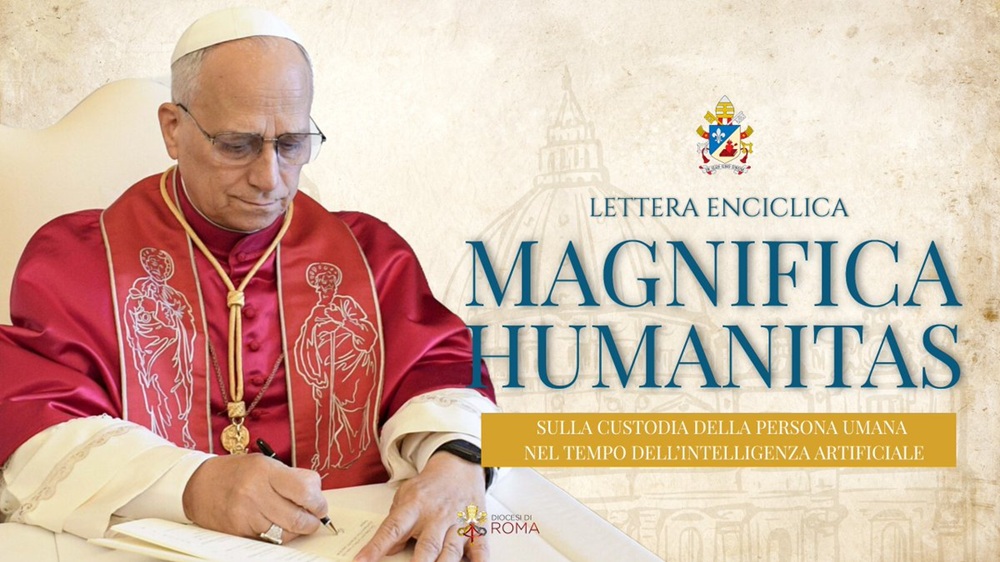
Pope Leo XIV’s first encyclical, Magnifica Humanitas (“Magnificent Humanity”), may become one of the defining Church documents of our modern age. In this powerful and ambitious teaching, the Holy Father reflects on one of the greatest questions facing humanity today: how can we preserve human dignity and remain truly human in a world increasingly shaped by artificial intelligence and rapidly advancing technology?
What makes this encyclical especially striking is the way Pope Leo frames the entire document through two biblical images: the Tower of Babel and the rebuilding of Jerusalem after its destruction. Humanity is always building something — societies, technologies, economies, systems of communication — but the deeper question is how and why we build. Babel represents human pride, self-sufficiency, control, and a society that attempts to reach greatness without God. In contrast, the rebuilding of Jerusalem under Nehemiah represents prayerful cooperation, responsibility, humility, and rebuilding for the sake of communion and the common good.
Throughout the encyclical, Pope Leo warns that many modern technologies, while capable of doing great good, can also become deeply dehumanizing. He addresses artificial intelligence, disinformation, warfare, autonomous weapons, economic inequality, cryptocurrency, surveillance, and the exploitation of workers. He recognizes that technology can educate, heal, connect, and protect, but he also warns that it can divide societies, manipulate truth, replace meaningful human labor, and reduce people to numbers, data, or economic units.
One of the strongest themes of Magnifica Humanitas is the need for moral responsibility and transparency. Pope Leo repeatedly insists that computers and algorithms cannot replace human conscience. Technology cannot become an excuse for avoiding accountability. When human dignity suffers, someone must be morally responsible. The Holy Father emphasizes that companies, governments, and societies cannot simply “hide behind algorithms” while allowing injustice, manipulation, or exploitation to spread.
Perhaps the most profound section of the encyclical is Pope Leo’s reflection on transhumanism and posthumanism — movements that seek to merge humanity with technology or overcome the limitations of the human condition. Modern society often treats weakness, illness, suffering, aging, and vulnerability as flaws that need to be eliminated. But Pope Leo offers a deeply Christian vision of humanity: our limitations are not meaningless defects. Very often, it is precisely through suffering, weakness, and vulnerability that human beings grow in compassion, love, sacrifice, wisdom, and openness to God.
The encyclical teaches that humanity flourishes not despite its limitations, but often through them. To eliminate every form of suffering entirely would also risk eliminating compassion, dependence on one another, spiritual longing, and even love itself. Pope Leo reminds us that true human transcendence does not come through technology, but through love, communion, grace, and relationship with God.
Another important theme is truth. In an age of artificial intelligence and digital media, manipulated information and “fake news” can rapidly spread fear, division, propaganda, and mistrust. Pope Leo strongly defends the importance of truth as a common good necessary for justice, peace, and authentic freedom. Artificial intelligence may imitate intelligence or empathy, but it does not possess conscience, mercy, moral responsibility, or the human capacity to choose sacrificial love.
Overall, Magnifica Humanitas is both a warning and a message of hope. It is not anti-technology, nor does it reject scientific progress. Rather, it calls humanity to place technology at the service of the human person, rather than allowing humanity itself to become enslaved to efficiency, profit, control, or technological power. The Holy Father reminds the world that every person possesses a God-given dignity that no machine can ever replace.
The encyclical is challenging because it asks for more than superficial reforms. It calls for a deeper conversion of culture, economics, politics, and even the way people understand themselves. Yet at its heart, Magnifica Humanitas is a profoundly Christian proclamation that the future of humanity will not be saved by technology alone, but by truth, communion, compassion, responsibility, and above all, love revealed in Jesus Christ.
Hieromonk Gabriel Haber, OSBM


